

Kharkiv,
Gromadyanska St., 11/13
September 1, 2026
Most teams get introduced to Agile in the same way — through a lecture, a presentation, and a dozen slides about backlogs and increments.
Focused Mind Studio — an Agile training company and a member of Kharkiv IT Cluster — took a different approach by creating the SCRUM UP! game. In it, players experience Scrum principles in practice, working together around the same table.
What is SCRUM UP!
SCRUM UP! is a cooperative board game for teams of up to ten players. Over the course of several sprints, the team goes through the full Agile development cycle — from creating a backlog to evaluating the value delivered to the client.
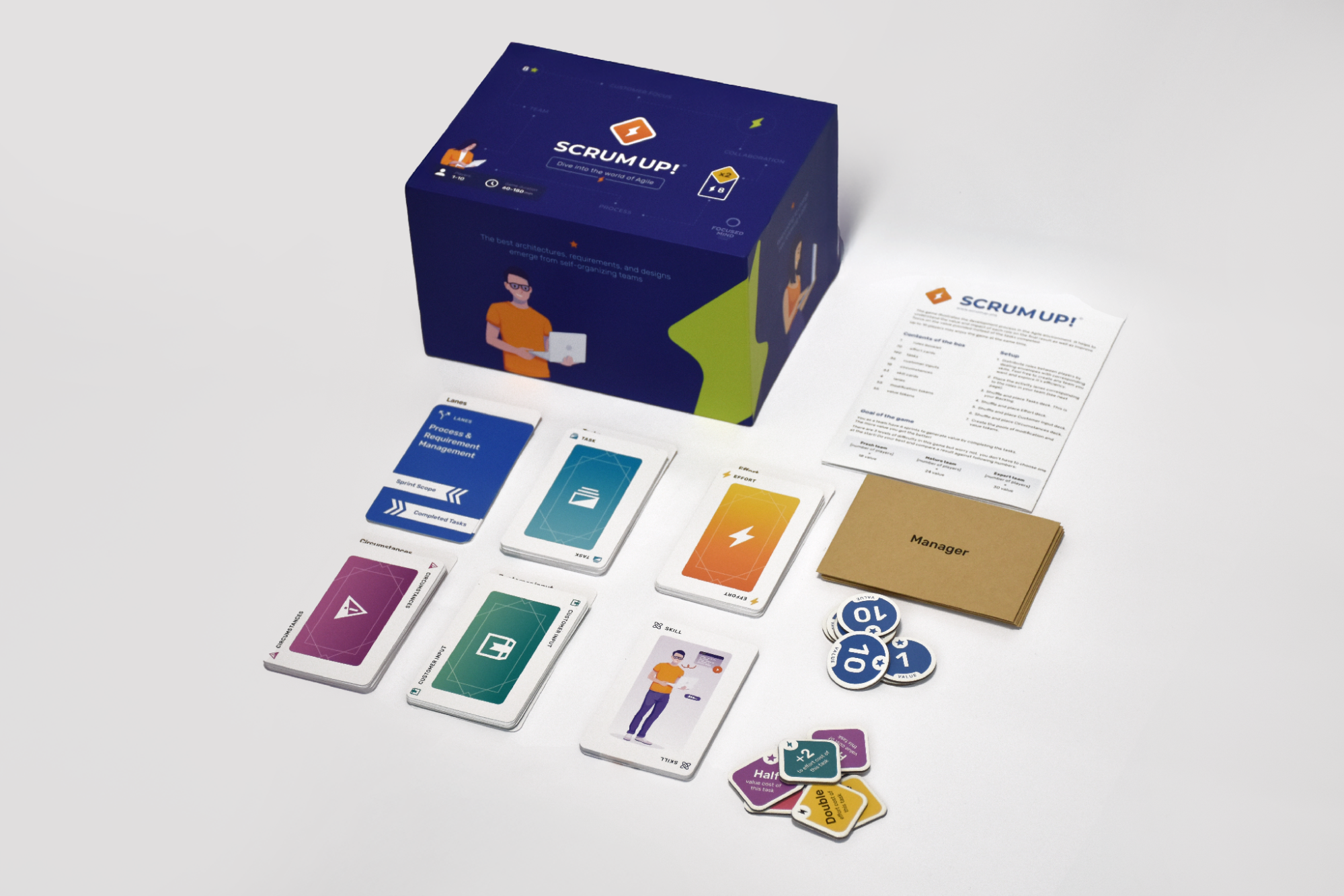
The box contains everything needed to simulate teamwork: a rulebook, decks of task and team resource cards, client request and circumstance cards, role envelopes, activity tracks, tokens, and skill cards.
Before the game starts, players choose their roles and create a backlog. The combination of roles can be adapted to the team — just as in a real-world project, a team rarely has exactly the same composition twice.
Roles and Cross-Functionality
The game features five typical roles:
- Manager — monitors scope and priorities and supports communication with the client.
- Developer — completes tasks using unit testing and refactoring.
- Business Analyst — breaks complex tasks down into clear, manageable steps.
- Test Engineer — is responsible for the quality of the result.
- Designer — adds form and usability.
Each role has its own set of skills and tasks, so players constantly need to work together — just like a real cross-functional Scrum team.
How a Sprint Works
A sprint in SCRUM UP! consists of five steps:
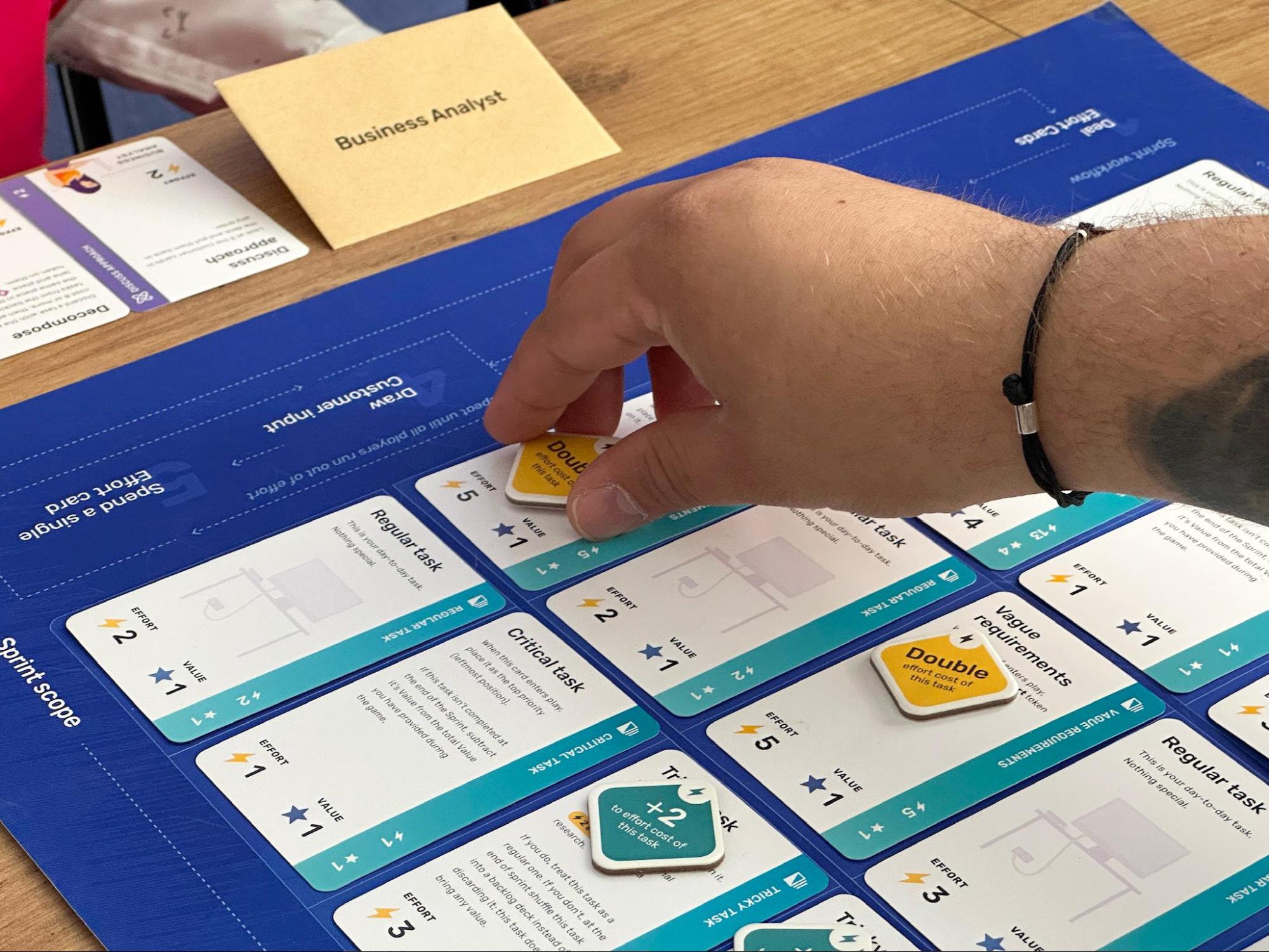
- Scope Definition. Players take tasks from the backlog and arrange them on their activity track by priority, deciding how much work the team is ready to take on.
- Circumstances. A circumstance card sets external conditions that affect how the sprint unfolds.
- Client Requirements. At the beginning of each turn, a new client request card may change priorities or introduce a challenge that the team needs to adapt to.
- Team Effort Allocation. Players invest resources in priority tasks or activate unique skills associated with their roles. Once enough effort has been invested, the task is completed and its value is added to the team’s score.
- Sprint Completion. When the effort cards run out, unfinished critical tasks are deducted from the value created.
The key focus of every round is not the number of tasks completed, but the value delivered to the client.
Why It Works: Board Games and Soft Skills Development
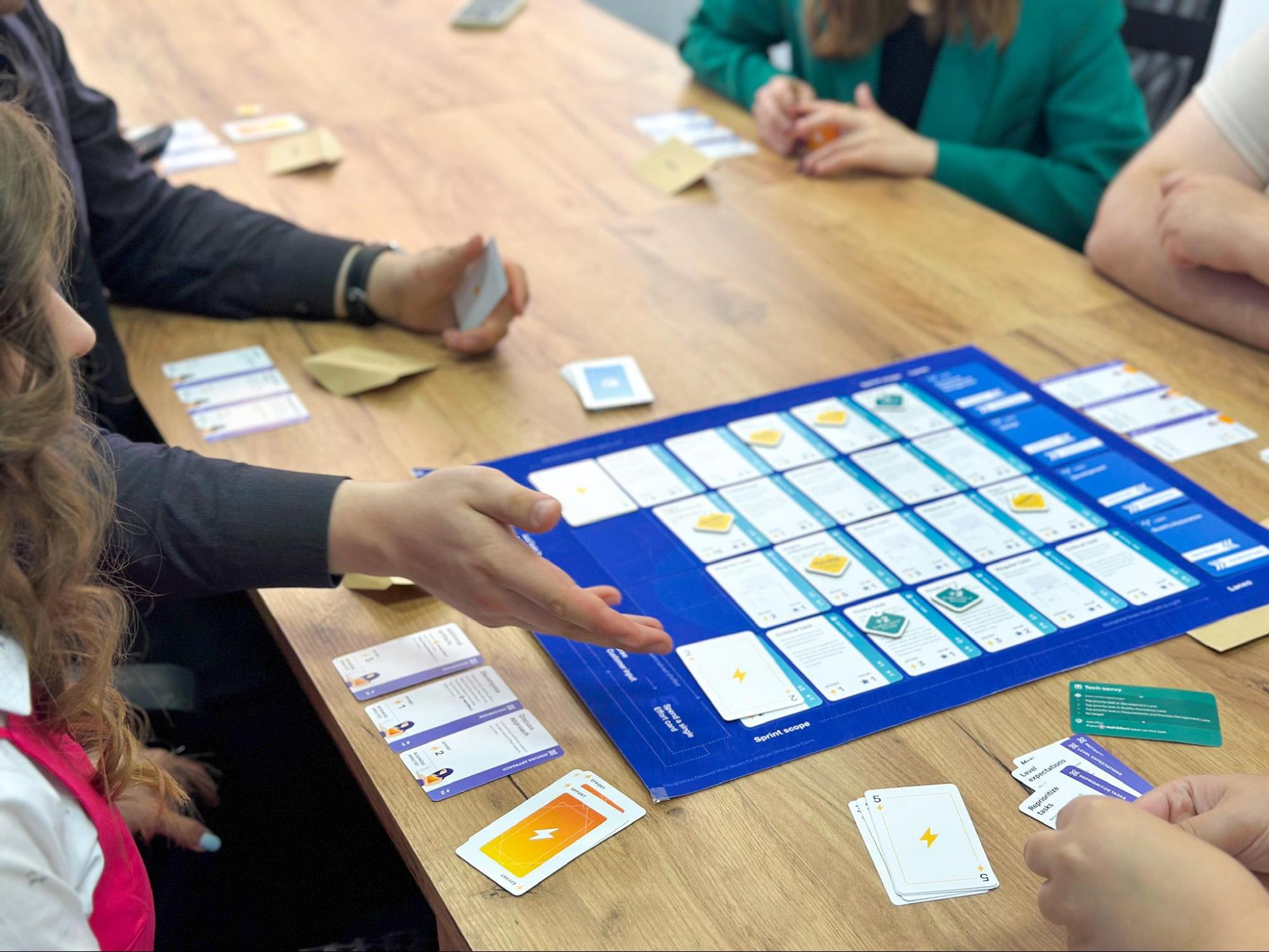
Playing together around the same table helps teams quickly learn to listen to one another, communicate openly, make decisions under pressure, and share responsibility for the overall outcome.
This is exactly what SCRUM UP! is built around:
- Self-organization without an assigned leader. There is no fixed leadership role in the game — leadership emerges naturally depending on the situation.
- Prioritization and negotiation. Players constantly decide what to tackle first, learn to justify their positions, and negotiate with their teammates.
- Cross-functional collaboration. Each role is unique, so players learn to understand the actions of others and appreciate their contribution to the shared result.
This is the essence of Scrum: move in short iterations and regularly demonstrate a working result.
If your team wants to strengthen its Agile skills in a format that is engaging and memorable — give SCRUM UP! a try!
Read also
All news
Kharkiv IT Cluster is launching a new era of cooperation by signing a memorandum with the American non-profit organization TechHope Transitions Inc.The new international partner...
Читати повністю
Diia.Business is a support hub for the local business community, focused on entrepreneurship development and the digital transformation of small and medium-sized enterprises.Kha...
Читати повністю
Many entrepreneurs start their digitalization journey by searching for CRM, ERP, or other digital services. However, experts advise against rushing to choose software. The first...
Читати повністюSubscription to the email newsletter
Want to stay updated on the latest IT events in the region?
Subscribe to our newsletter!